The honest used car buying guide
Plain-English advice that works wherever you buy — from us, from another dealer or from a private seller. No jargon, no sales pitch.
Start here
5 questions worth asking before you buy
These are the five questions we tell every customer to ask. A good seller will be glad you did. Tick them off as you go — or send them straight to us.
Stamps in the service book or a folder of invoices show how the car has been looked after. Ask to see it, not just hear about it. Patchy history isn't always a deal-breaker on an older car, but you should know before you agree a price.
A long MOT means fewer surprises in the first few months. You can check any vehicle's MOT history — passes, fails, advisories and recorded mileage — for free on GOV.UK using just the registration.
New tyres, brakes, a battery, a cambelt or a clutch are all money you won't have to spend. Ask what's been done and whether there's a receipt for it.
Every used car has a story. An honest seller will tell you about the scuff on the bumper or the advisory on the last MOT. If the answer is “it's perfect” on a fifteen-year-old car, ask again.
The answer should always be yes. Ten minutes on the road tells you more than any advert. Bring your driving licence and drive the kind of roads you normally use.
First-time buyers
Buying your first car
A lot of our customers are buying their very first car, often with a parent alongside. Here's what we tell them.
Get insurance quotes before you fall in love
For new drivers, insurance often costs more than the car. Two similar-looking hatchbacks can be in very different insurance groups, so run a quote on the exact registration before you commit. Smaller engines are usually — not always — cheaper to insure.
Budget for the whole year, not just the price
- Insurance, vehicle tax and fuel
- The annual MOT and a basic service
- A little set aside for tyres, wipers and bulbs
Check your licence matches the gearbox
If you passed your test in an automatic, you can only drive automatics. If you passed in a manual, you can drive both. Our listings show the gearbox wherever we know it for certain.
Simple beats flashy
A common, straightforward car is easier to insure, cheaper to fix and easier to sell on later. Parts are everywhere and every garage knows them.
On the day
What to check on a viewing
You don't need to be a mechanic. You need daylight, ten unhurried minutes and the confidence to ask. Nobody here will rush you.
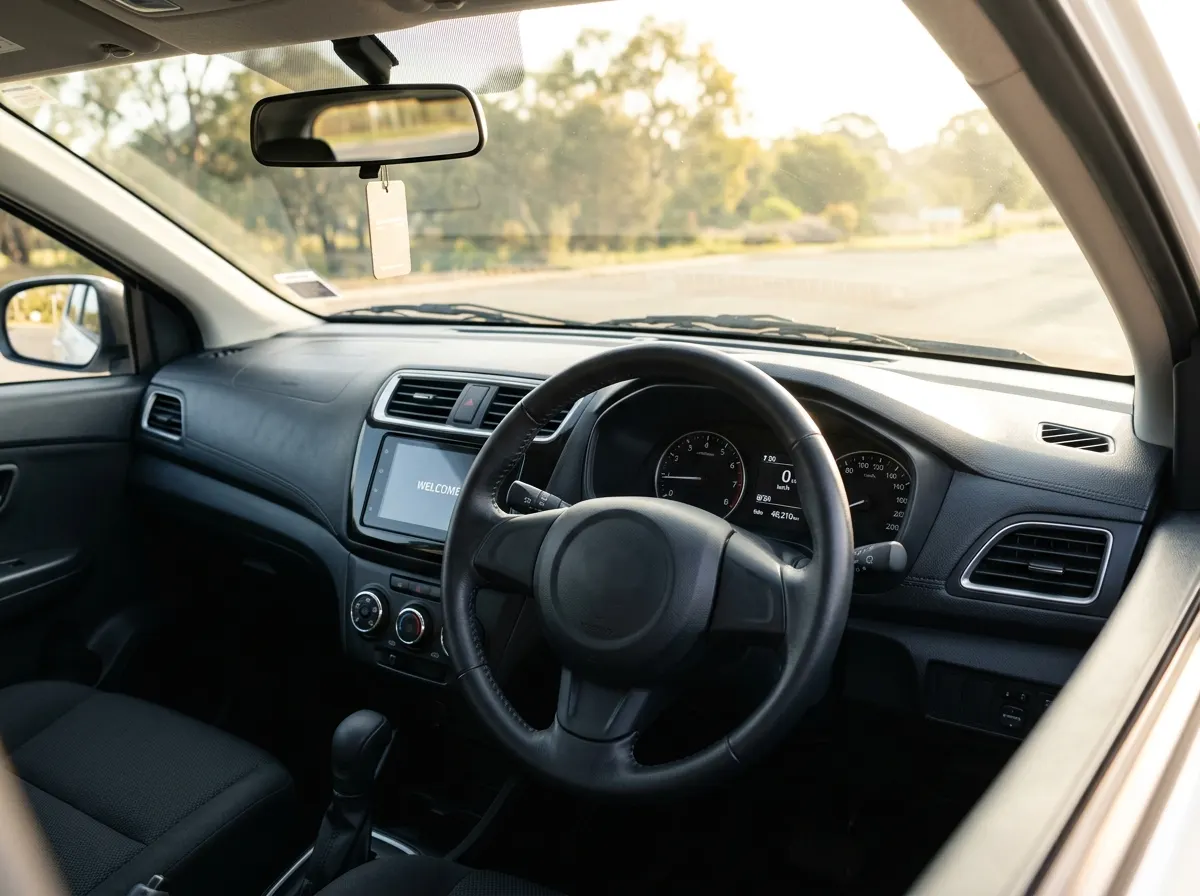
Before you set off
- Look up the MOT history on GOV.UK with the registration. Note any advisories to ask about.
- Message ahead to check the vehicle is still available and to have it ready.
- Bring your driving licence for the test drive.
Walk round it
- View it in daylight and, ideally, dry — rain hides paint and bodywork marks.
- Look along the sides for ripples, mismatched paint or uneven gaps between panels.
- Check all four tyres for tread and even wear. The legal minimum is 1.6mm across the central three-quarters of the tyre.
- Try every door, the boot, the bonnet, the windows and the locks.
Inside and under the bonnet
- Turn the ignition on: warning lights should come on, then go out once the engine is running.
- Test the heater, air conditioning, lights, wipers, radio and any parking sensors.
- Check the oil and coolant levels and look for obvious leaks.
- Ask to start the engine from cold if you can — it should fire up cleanly without clouds of smoke.
On the test drive
- The clutch should bite smoothly and gears should go in without crunching.
- On a straight, quiet road the car should track straight and brake in a straight line.
- Listen for knocks over bumps and whines that change with speed.
- Try a hill start, a tight turn and a bit of faster road if it's safe to do so.
Before you drive away
Paperwork you should receive
Whoever you buy from, don't hand over money until you've seen the documents — and don't leave without them.
V5C registration certificate
The “log book”. Check the registration, make, colour and VIN match the car in front of you. When the sale is recorded you keep the green “new keeper” slip until DVLA posts your new V5C.
MOT certificate
Cars over three years old need a valid MOT every year. The record is held online, so you can confirm the expiry date and past results yourself on GOV.UK.
Service book & invoices
If the car has service history, the stamped book and any receipts for work should go home with you. They add value when you sell it on.
A proper receipt
Dated, with the seller's name and address, the vehicle's registration, the price paid and how you paid. Keep it somewhere safe.
Two more things to sort before you turn the key: vehicle tax doesn't transfer to a new keeper, so you need to tax the car in your name, and you must have insurance in place before you drive it on the road. Both can be done from your phone in a few minutes.
Check any vehicle's MOT history for free
The official GOV.UK service shows every pass, fail and advisory, plus the mileage recorded at each test. All you need is the registration number.
Ready to ask us the five questions?
Pick a vehicle, message us, and you'll get straight answers from a real person.